Essay · March 30, 2016
Easy For You to Say
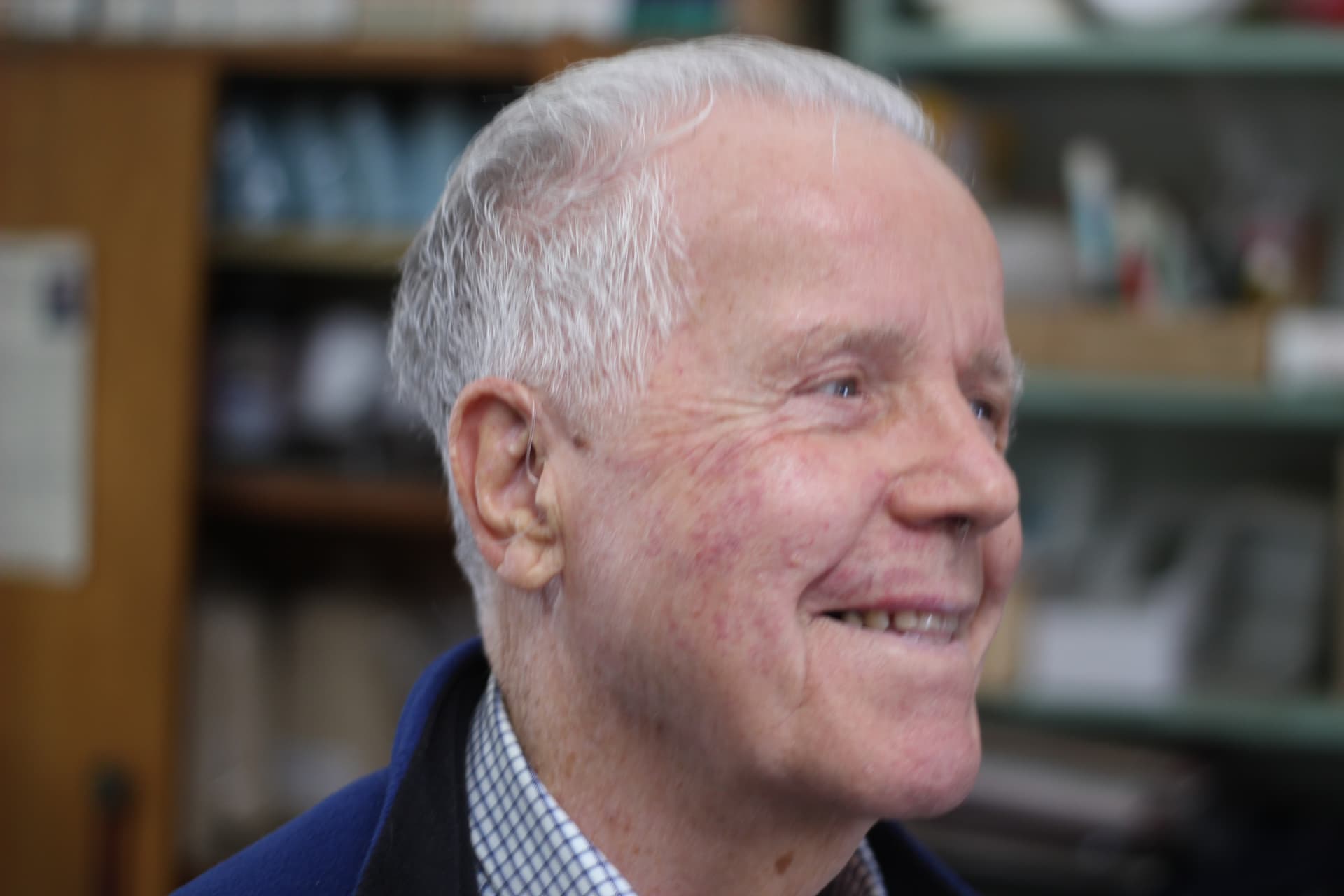
“Get me to Oregon, John,” he said as we walked to the car while my three brothers handled the paperwork in the doctor’s office.
“What’s in Oregon?” I asked, even though I knew the answer.
“Assisted suicide.” He gauged my reaction.
I said, “I’m not sure you can just hop on a plane and make that happen, Dad.”
“Find out. I shouldn’t have to live like this,” he replied.
“I’m not sure we can help you die,” I said, speaking for my brothers and sister. Then added, “We can’t just let you give up.” He raised us not to quit - by example.
He looked pissed. “That’s easy for you to say.”
After 85, Mother Nature had poked him like a Voodoo doll, one needle after another. Dad fended off an enlarged prostate, cataracts, and failing joints. A painful ear infection recently planted its flag on Dad’s sovereignty. Aging took the good choices away from him. He thought the Oregon decision was still his to make.
The hot July sun cooked all the oxygen out of the car and I felt chills down my spine. He was right. “Don’t give up” sounded so trite. I started the car and the AC running for his comfort and to catch my breath.
“Did the doctor say I have cancer?” he asked. Since his need for hearing aids, we went with him to all his appointments.
“Yes. You have a slow moving lymphoma,” I said.
“Why does my ear hurt?”
“It’s infected. There is a boxing match between the lymphoma and the infection. The lymphoma is wearing 16 ounce gloves, the infection is wearing brass knuckles,” I explained.
“What about chemo?” Dad hated that word. The pain must have been intense.
“Chemo makes the ear infection worse,” I told him. “They can treat the infection or they can treat the lymphoma. Treating one makes the other worse. There is no good choice.”
Gravity pulled a tear across his weathered cheek as he realized the consequences of not treating the cancer.
Dad survived the Depression, the attack on Pearl Harbor and, perhaps more harrowing, raised five teenage kids through the 60s. He was tough. He was a Marine. A life spent as a machinist, making things with his hands. Dad was born in an age when the best way to keep a motor running was to never shut it off.
The motor sputtered from time-to-time, but somehow kept running even after he lost his wife. Mom died suddenly after a fall nearly 15 years ago. No one saw it coming. How did he mourn a marriage that lasted over half a century? Dad suffered quietly, died a little inside, then dove back into living.
It started with senior tennis at the park. If you asked, they all said they were there for the camaraderie, not the competition. I played with them often and observed it to be true, but you better not miss a line call.
One of the tennis players taught line dancing and he joined his group. A year later, Dad called me. “John, Levan Institute offers a ballroom dance class,” he said.
“Wow, Dad that’s great.”
“It’s Foxtrot and Waltz,” he went on.
“Wonderful,” I said. “Sounds like fun.”
“Good. I need you and Ranae to sign up,” he said.
“Uh,..I’m sorry...what was that?” My wife, Ranae, would love dance class, but I bought shoes two pairs at a time to fit both my left feet.
“Yeah, can you do it today? I don’t want them canceling the class because it didn’t fill up.”
Dad didn’t ask for things often. He was clever that way. When he pulled the trigger, there was no way to wiggle out. We signed up for the class and on the first night the room was packed with dancers, including my oldest brother, Tom. Dad cast his net wide and caught us both.
My other brothers and sister kept him busy too. A trip to Germany for Oktoberfest, then China to see the Great Wall, were the bookends between tennis, dancing, and attending great grandkids’ little league games. Everyone shared time with “Double G”.
The doctors puzzled over the ear infection for six months. Finally, a specialist said four to six weeks intravenous antibiotics were his only hope. These were the strongest antibiotics medicine possessed, given every 12 hours. In a quirk of bureaucracy, insurance paid for the medicine, but not for hospitalization.
We explained it to Dad and asked if we, his kids, could give him the treatment. Reluctant at first to be a burden, he relented. The five of us set an around-the-clock schedule and pumped the magic elixir through the PICC line hoping for a miracle.
After six weeks the doctor tacked on an additional four. The only way to find out if it worked was to stop treatment. In seventy-two hours the pain rushed back in like a bolt of lightning. The treatment failed, but none of us regretted the time we spent with Dad.
His medical team made a few more heroic attempts. None very effective, except to give us time to learn that the term “palliative care” means “keep him comfortable until he dies”.
Dad entered a nursing facility. We visited him every day. My brothers and sister came in the afternoon. Early mornings worked best for me. Shift change occurred at 7 am and I listened to the report as one nurse handed him off to another. For a man who had been as consistent as the sunrise all my life, these final months were just the opposite. A fortune-teller had as good a chance of predicting what the day brought. Some days he was up, dressed, and cheerful. Some days he refused to move.
Breakfast was an adventure. The slow moving lymphoma had found a second wind and began to sprint. Eating became a chore. He couldn’t eat much and keep it down. What did go down went right through. At first he was depressed, then in his own unique way, he laughed at his bodily malfunctions. Maybe, after years working with machines, he just knew when something wore out, that’s it.
After breakfast I rolled his wheelchair outside to the garden. Summer turned to fall and the cool mornings lent themselves to wonderful conversations reminiscing about life and the good times we had as a family. Dad never brought up Oregon again.
One day, near the end, Dad slept while I read by his bedside. A nurse came in to check his vitals.
“He is a great father,” she said.
“Yes, he is, thank you. Do you know him?” I asked.
“No. I can tell by his children. You, your brothers, and sister are always here. Good fathers have their kids by their side. I see so many fathers die alone,” she said.
Medicine handed the baton to hospice in October. Two months from his 90th birthday, six months after his last tennis game, Dad’s motor sputtered for the last time and stopped. The dance was over.